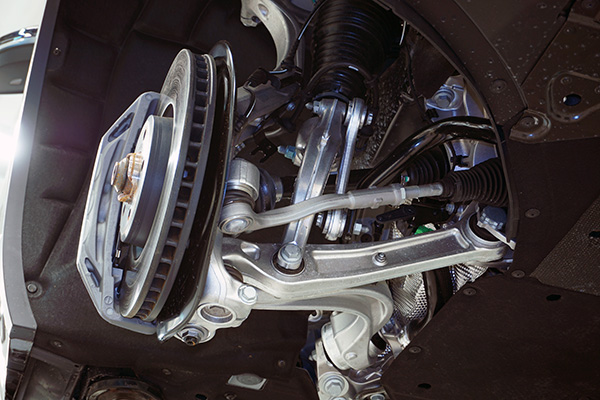
You steer into a familiar corner and feel the body lean farther than it used to. The car still tracks around the bend, but the movement feels slow and unsettled. Maybe a rattle has joined the change in handling. It's tempting to blame the entire suspension, yet the sway bar and its connecting hardware are worth examining. They have a specific job during turns, and a damaged connection changes how that job gets done.
The important step is separating a broken sway bar from worn links, bushings, or unrelated suspension wear.
How the Sway Bar Controls Body Roll in Corners
The sway bar, also called an anti-roll bar or stabilizer bar, connects suspension movement across an axle. When both wheels rise together, the bar generally twists less. When the body leans through a turn and one side of the suspension compresses more than the other, the bar resists that difference. This helps keep body movement controlled.
A properly working sway bar doesn't eliminate leaning.
Every vehicle has its own balance of comfort, roll control, and tire grip. A family SUV feels different from a low sports sedan even when both systems are healthy. The concern is a new change in behavior, particularly when the vehicle used to settle through turns without the same extra movement.
Broken Sway Bars and Disconnected End Links
The solid or hollow metal bar itself is generally durable, but it can crack or break after a severe impact or prolonged corrosion. More commonly, the end links or mounting hardware wear out. The links connect the bar to the control arm, strut, or another suspension point. When one separates, the bar can't transfer forces through that connection as intended. A disconnected link often produces rattling over small bumps. Severe wear also reduces the bar's effect during cornering.
The exact change depends on which axle is affected and how the vehicle was originally designed. Inspect the bar, both links, attachment points, and mounting brackets before calling for a complete sway bar replacement. When the sound appears after a driveway entrance, we inspect the bar, links, and brackets under the right load.
Worn Sway Bar Bushings Cause Clunks and Movement
Rubber mounting bushings hold the bar against the body or subframe.
They allow the bar to rotate through a controlled range while keeping it from sliding or striking the brackets. As the rubber hardens, compresses, or tears, the bar develops room to shift. Drivers often hear a dull knock when entering a driveway diagonally or crossing rough pavement.
The noise often seems to come from the center of the front suspension instead of one wheel. Sometimes the bar itself is completely sound and only the bushings need service. Replacing the entire assembly in that case adds cost without improving the repair.
Why a Loose Sway Bar Isn't the Only Cause of Unstable Handling
The springs carry the vehicle's weight, and shocks or struts control how the body settles after movement. Worn dampers make a car feel floaty through curves. Is the bar itself damaged, or is another suspension part allowing the extra movement? Loose control arm bushings and ball joints change wheel alignment under load. Even incorrect tire pressure or uneven tread wear affects confidence in a turn.
That's why excess leaning doesn't prove a sway bar failure. A quick visual check is a start, but the whole suspension needs inspection. We compare the front and rear suspension, check for excessive movement, and examine the tires. Several smaller faults sometimes combine to make the car feel much less stable than one worn link would suggest.
Symptoms That Call for a Sway Bar Inspection
Describe what changed and when it happens. A rattle over small bumps tells a different story from a car that abruptly shifts during braking. These observations help narrow the inspection:
- Extra body lean during normal turns
- Rattling over patched or broken pavement
- A dull knock entering angled driveways
- A visible loose or disconnected link
- New instability after a pothole impact
Avoid assuming a noise is harmless because sway bar links are common wear items. A badly worn ball joint or steering connection makes similar sounds and carries greater safety risk. Sudden loss of stability calls for prompt professional inspection.
When Should the Sway Bar or Links Be Replaced?
A broken bar needs replacement. End links with loose ball joints or damaged bushings usually require new assemblies, while worn mounting bushings are often serviced separately. A link that's merely making noise because its fastener came loose needs a thorough check of the threads, bracket, and joint before tightening is considered a lasting repair.
Replace both links when testing confirms both are worn. One failed link doesn't automatically condemn its partner. A proper quote reflects the car's actual condition and how accessible the hardware is. Replacing a sway bar link alone rarely affects alignment, although work on other suspension parts sometimes requires an alignment afterward. We'll show you the failed connection before recommending which parts need replacement.
Is It Safe to Keep Driving With a Damaged Sway Bar?
A mildly worn link often allows the vehicle to move under its own power, but cornering balance is no longer what the manufacturer intended. Is that loose sway bar link safe to ignore for another month? A separated link sometimes strikes the axle, wheel, or nearby parts. More serious steering or suspension defects must be ruled out before continuing to drive.
When the vehicle leans suddenly, steers unpredictably, or makes heavy clunks, avoid highway travel. Have a technician inspect the suspension instead of testing its limits on public roads. Repairing a loose component early also protects brackets and surrounding hardware from extra movement.
Sway Bar and Suspension Repair in Bear, DE
At Fox Run Auto in Bear, DE, we inspect sway bars, end links, mounting bushings, shocks, and steering joints when a car begins to lean or rattle through turns. We want to identify the failed connection and restore stable, predictable handling.
If a familiar corner suddenly feels different, have the suspension checked before the next sharp turn exposes the problem again.