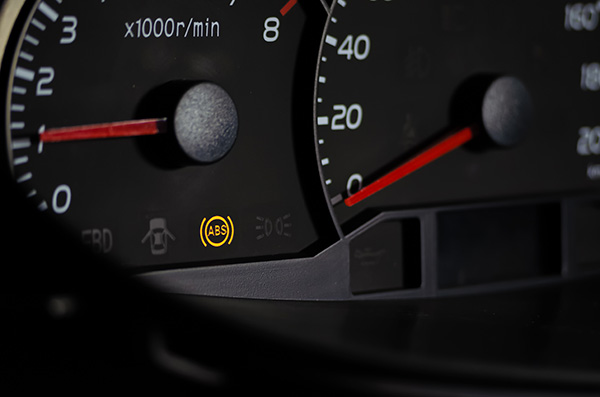
An ABS light can be easy to underestimate because the vehicle may still stop when you press the brake pedal. The car starts, drives, and slows down, so it can feel like the warning is not urgent. That reaction is understandable, but the ABS light should not be ignored.
ABS stands for anti-lock braking system. It helps prevent the wheels from locking during hard braking or on slippery roads. When the light stays on, the system has detected a problem and may not be able to help when you need it most. Your regular brakes may still work, but one important safety feature may be out of service.
What The ABS Light Means
The ABS light means the anti-lock braking system has found a fault. The problem could be a wheel speed sensor, wiring issue, low voltage, hydraulic control problem, damaged tone ring, failed ABS module, or another related concern. The warning does not tell you which part failed by itself.
In many vehicles, the ABS runs a self-check when you start the car. The light should come on briefly, then turn off. If it stays on or comes back while driving, the system needs attention. A scan can help pinpoint the affected area, but further testing is needed to confirm the cause.
Can You Still Brake With The ABS Light On?
In many cases, the regular brake system still works when the ABS light is on. You can press the brake pedal, slow the vehicle, and come to a stop. That is why some drivers keep driving for days or weeks after the warning appears.
The difference shows up during panic stops, on wet roads, on loose gravel, in snow, or during sudden traffic changes. Without ABS working correctly, the wheels can lock more easily during hard braking. Locked wheels can reduce steering control, which makes it harder to avoid an obstacle while stopping.
Why ABS Helps During Emergency Braking
ABS is designed to pulse brake pressure rapidly when it detects a wheel starting to lock. That pulsing helps the tires keep rotating enough for you to maintain steering control. In an emergency, being able to steer while braking can be just as important as stopping distance.
If ABS is disabled, the vehicle may still stop, but it can behave differently during hard braking. The pedal may not pulse as expected, the tires may skid, or the vehicle may feel less controlled. That difference can be much more noticeable on slick pavement than on dry roads.
Common Causes Of An ABS Warning Light
ABS problems can come from several parts of the system. Some are simple, while others require more involved testing.
- Damaged wheel speed sensor
- Broken or corroded sensor wiring
- Cracked tone ring or wheel bearing issue
- Low brake fluid level
- Weak battery or charging system problem
- ABS module or pump fault
- Brake hydraulic system concern
These issues can cause similar warning lights, so the car should not be diagnosed solely by the light. A proper inspection helps confirm whether the issue is electrical, hydraulic, mechanical, or related to another brake component.
When Driving With The ABS Light Is Riskier
Driving with the ABS light on is riskier when road conditions are poor. Rain, ice, snow, gravel, and uneven pavement can all make wheel lockup more likely. It is also more concerning if you drive in heavy traffic, on highways, or in areas with frequent sudden stops.
If the ABS light comes on with a red brake warning light, a soft brake pedal, grinding noise, a brake fluid leak, pulling, or reduced braking power, you should not treat it as a minor warning. Those signs can point toward a larger brake system issue. In that situation, the vehicle should be checked before driving further.
ABS, Traction Control, And Stability Control Can Be Connected
On many modern vehicles, ABS works with traction control and stability control. These systems use wheel speed data to understand how the tires are moving. If one wheel speed sensor fails, several warning lights may illuminate simultaneously.
That can affect more than braking. Traction control may not respond correctly during acceleration, and stability control may not help as much during a skid or quick steering move. Regular maintenance can catch brake wear, tire issues, and fluid problems, but electronic ABS faults still need proper testing when the warning light appears.
Why ABS Testing Should Not Be Delayed
An ABS warning light can sometimes be caused by a small issue, such as a dirty sensor connection or damaged wire. Waiting too long can make the problem harder to track if corrosion spreads or related warning lights appear. If the issue involves a wheel bearing, brake fluid level, or hydraulic component, delay can also affect other parts of the brake system.
A technician can scan the ABS system, review live wheel-speed data, inspect wiring, check brake fluid, inspect wheel bearings and tone rings, and test related brake components. That process gives a clear answer instead of replacing parts based on the warning light alone.
Get ABS Light Repair In Bear, DE, With Fox Run Auto
If your ABS light is on, Fox Run Auto in Bear, DE, can check the anti-lock braking system, brake fluid, wheel speed sensors, wiring, and related brake components to find the cause.
To restore safer braking control before the warning becomes a bigger concern, contact us to schedule an appointment.