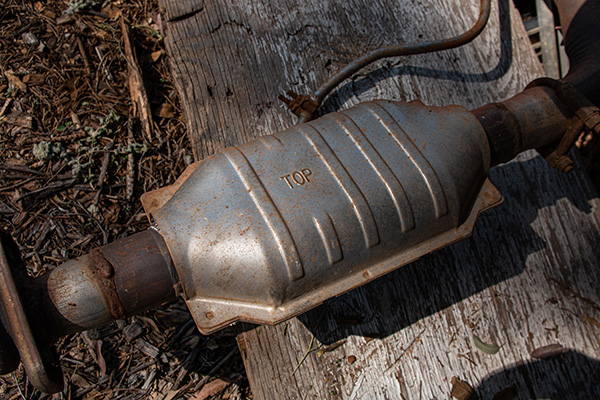
A check engine light tied to the catalytic converter can be frustrating because the car might still drive fine. No loud noise. No smoke. No major change you can feel right away. Then the scan shows a catalyst efficiency code, and suddenly the repair sounds expensive.
The converter might be the problem.
It may be the part that was blamed after another issue damaged it.
What The Catalytic Converter Does
The catalytic converter sits in the exhaust system and helps clean up harmful gases before they leave the tailpipe. It works with oxygen sensors and the engine computer to monitor how well the exhaust is being cleaned.
When everything is working correctly, the converter handles the exhaust quietly. You do not feel it doing anything. The computer monitors sensor readings before and after the converter, and if the readings are too similar, it can set a check engine light for low efficiency.
That does not always mean the converter failed on its own. It means the system is seeing exhaust cleanup that is no longer where it should be.
Why The Check Engine Light Comes On
A common converter-related code is tied to catalyst efficiency. The computer compares readings from upstream and downstream oxygen sensors. If the downstream sensor shows excessive activity, the system assumes the converter is not properly storing and processing exhaust gases.
Here is where people get into trouble. A code can point toward the converter, but it does not explain why the converter is struggling. A weak sensor, exhaust leak, misfire, oil burning, rich fuel mixture, or wiring issue can all affect the readings.
We look at the whole pattern before calling the converter bad.
Problems That Damage Catalytic Converters
Catalytic converters are not designed to handle raw fuel, coolant, or engine oil. When those things enter the exhaust, heat and contamination go up fast. That is when a converter can start breaking down internally.
Misfires are one of the biggest converter killers. If a cylinder does not burn fuel properly, unburned fuel enters the exhaust and overheats the converter. Oil burning can coat the internal surface. A rich-running engine can keep dumping too much fuel through the system.
The converter gets blamed later, but the real damage started upstream.
Signs The Converter Itself Is Failing
A bad catalytic converter can show up in a few ways. Some drivers notice weak acceleration, especially at higher speeds or when climbing a hill. Others hear a rattle under the vehicle because the material inside the converter has started breaking apart.
A sulfur or rotten-egg smell can also appear when the converter is not processing exhaust properly. In some cases, the car runs hotter than normal or feels like it cannot breathe. A restricted converter can choke the exhaust flow, making the engine feel lazy.
Still, symptoms alone are not enough. A clogged converter, a weak fuel pump, an ignition issue, or an exhaust leak can feel similar from the driver’s seat.
Oxygen Sensors Can Confuse The Picture
Oxygen sensors are part of the converter conversation because they tell the computer what is happening in the exhaust. If a sensor slows down, becomes contaminated, or starts sending bad data, the computer can think the converter is failing.
An exhaust leak near a sensor can do the same thing. Extra oxygen enters the exhaust stream and changes the reading. The light comes on, the code points toward efficiency, and the converter gets suspected.
That is why replacing the converter without checking sensors, leaks, fuel trim, and misfire history can waste money. The new converter can end up facing the same conditions that hurt the old one.
What We Check Before Replacing It
A good inspection starts with scan data. We want to know which code is stored, whether there are pending codes, and what the oxygen sensor readings look like. Then we check for misfires, fuel-control problems, exhaust leaks, clues of oil consumption, and signs of overheating.
A few details help narrow it down:
If several of these show up together, the converter may be only part of the repair. The cause has to be handled, too.
How To Protect The Converter
The best way to protect a catalytic converter is to keep the engine running cleanly. Spark plugs, ignition coils, air leaks, fuel control, oil leaks, and coolant problems all affect what reaches the exhaust. Regular maintenance helps catch those issues before the converter becomes the most expensive part of the story.
If the check engine light is flashing, stop driving it like normal. That usually points to an active misfire, which can quickly overheat the converter. A steady light gives you more time, but it still deserves attention before the same fault keeps repeating.
Get Catalytic Converter And Check Engine Light Service In Bear, DE, With Fox Run Auto
If your check engine light is on and a catalytic converter code comes up, Fox Run Auto in Bear, DE, can test the exhaust, sensors, fuel control, and misfire data to find out what is really happening.
Book a visit and get the cause confirmed before spending money on the wrong repair.