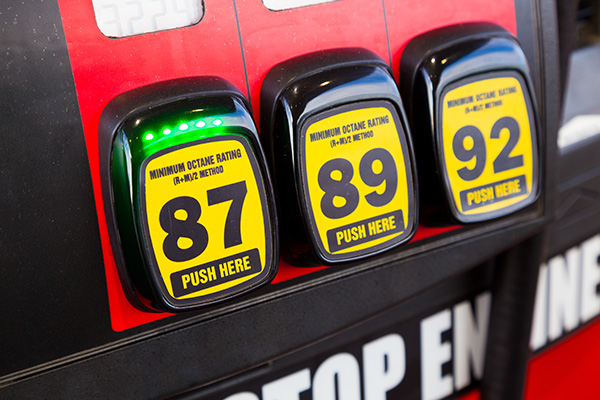
We’ve all felt that collective wince lately when pulling up to the gas station. You watch the numbers on the pump climb faster, and suddenly, that "Premium Fuel Only" sticker inside your gas door feels less like a suggestion and more like a personal attack on your wallet. With gas prices hitting heights that make even the most seasoned commuters consider trading their car for a bicycle, it’s only natural to wonder: Can I just use the cheap stuff for a while?
It’s a question we’re hearing more and more often here at the shop. People want to know whether they can "cheat" for a few tanks while prices spike, or if doing so will land them in our garage with a multi-thousand-dollar repair bill.
The honest answer? It depends entirely on what your car’s manual actually says.
The Science of "The Knock"
To understand if you can switch, you have to understand what octane actually does. There’s a common myth that premium gas is "cleaner" or "better" for your engine. In reality, octane is simply a measure of how much heat and pressure the fuel can handle before it ignites.
High-performance engines, especially those with turbochargers or high compression ratios, need fuel that won’t explode too early. If you put regular gas in an engine designed for premium, the fuel might ignite before the piston is ready. This creates a metallic "pinging" or "knocking" sound. Today’s cars have sensors to detect this and will actually de-tune the engine to protect it, but you'll notice a drop in power and fuel economy.
Requirement vs. Recommendation
This is the most important distinction you need to make before you reach for that 87-octane handle. Open your owner's manual or look at the gas cap:
Premium Recommended
If your car says premium is recommended, your engine’s computer is smart enough to adjust. In the short term, you can absolutely use regular octane. You might notice the car feels a bit sluggish when you're merging onto the highway, and your gas mileage might dip slightly, but you won't blow up your engine.
Premium Required
This is a different story. If the manufacturer uses the word "Required," they aren't kidding. These engines operate on very tight tolerances. While one tank might not cause immediate catastrophic failure, consistent use of regular gas in a "Required" system can lead to long-term damage to the pistons and spark plugs.
When the Strategy Might Work
If you’re trying to navigate this season of high prices, here are a few things to keep in mind:
Light-Footed Driving: If you decide to run a lower grade, avoid heavy acceleration. Pushing the engine hard is when "knock" is most likely to occur.
The Half-and-Half Method: Some drivers find a middle ground by filling half the tank with regular and the other half with premium, essentially creating their own "mid-grade" blend to save a few dollars without completely abandoning higher-octane fuel.
Check Your Altitude: If you’re driving in high-altitude areas, lower octane gas actually performs more like higher octane gas does at sea level. This is why you'll see 85 octane in the mountains.
Is the Saving Actually Worth It?
Here is the kicker that many people overlook: because your car’s computer retards the timing to accommodate lower-octane fuel, your fuel efficiency (MPG) goes down. If you save 40 cents a gallon but lose 3 or 4 miles per gallon, you might actually end up spending more money per mile than if you had just stuck with the premium.
Premium fuels often contain higher concentrations of detergents that keep your fuel injectors clean. Skipping out on these for months at a time can lead to carbon buildup.
If your car "recommends" premium and you’re staring at a $100 fill-up, switching to regular for a few weeks likely won't hurt anything. But if your car "requires" it, or if you start hearing any unusual clicking or tapping sounds from the engine bay, stop immediately.
Contact Fox Run Auto If You Have Questions
We want you to keep your car on the road as long as possible, and sometimes that means spending a little more at the gas station to save a lot more at the repair shop. Give us a call or stop byFox Run Auto in Bear, DE today.
We’ll take a look under the hood and make sure your engine is running exactly as it should!